Get Involved
Faith Outreach
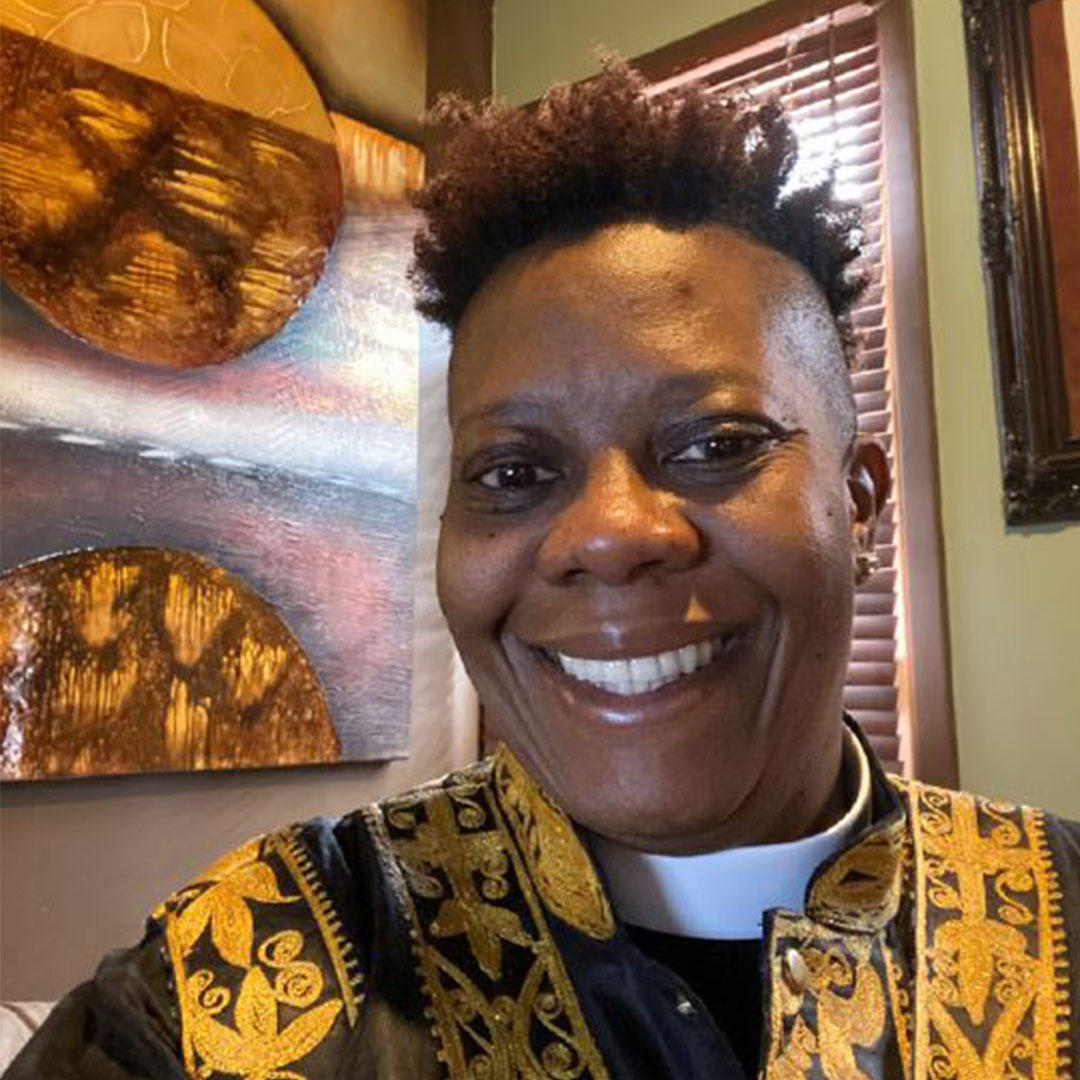
"The greatest love you can give to anyone is to give the gift of life."
Reverend Dr. Vanessa M. Brown
Rivers of Living Water
Newark, NJ
An Unselfish Act of Charity and Love
When considering life and death issues, such as organ and tissue donation, many people often turn to their faith leaders for spiritual guidance and to learn about their faith’s perspective.
Fortunately, virtually all of the world’s major religions hold official positions that look positively upon organ and tissue donation as an unparalleled gift of generosity and compassion. Even where a particular religion hasn’t stated a definitive position on donation, they allow freedom for the individual (or their family) to decide for themselves.
NJ Sharing Network is extremely fortunate to have strong partners in local faith-based communities who support its lifesaving mission. Faith leaders and devout followers of various religions from throughout the state have voiced their support for organ and tissue donation.
What Does Your Religion Say About Donation?
AME & AME Zion
Donation is viewed as an act of neighborly love and charity by these denominations. They encourage all members to support donation as a way of helping others.
Amish
The Amish will consent to transplantation if they believe it is for the well-being of the transplant recipient. John Hostetler, world renowned authority on Amish religion and professor of anthropology at Temple University in Philadelphia, says in his book, Amish Society, “The Amish believe that since God created the human body, it is God who heals. However, nothing in the Amish understanding of the Bible forbids them from using modern medical services, including surgery, hospitalization, dental work, anesthesia, blood transfusions or immunization.”
Assembly of God
The decision to donate is left up to the individual. Donation is highly supported by the denomination.
Bahai
The Bahai faith believes that transplants are acceptable if prescribed by medical authorities, and believers are permitted to donate their bodies for research and for restorative purposes.
Baptist
Though Baptists generally believe that organ and tissue donation and transplantation are ultimately matters of personal conscience, the nation’s largest protestant denomination, the Southern Baptist Convention, adopted a resolution in 1988 encouraging physicians to request organ donation in appropriate circumstances and to “…encourage voluntarism regarding organ donations in the spirit of stewardship, compassion for the needs of others and alleviating suffering.” Other Baptist groups have supported organ and tissue donation as an act of charity and leave the decision to donate up to the individual.
Buddhism
Organ and tissue donation is considered an individual’s decision. Buddhism does not promote or prohibit donation, but if an individual decides to become an organ donor, it is widely lauded as an act of compassion. In the case of deceased donation, the death process is an important, highly respected time for Buddhists, and the requests of the deceased takes precedence.
Catholicism
Organ, eye and tissue donation is an acceptable act of kindness in the Roman Catholic Church. Donation is considered an act of charity and love, according to Pope John Paul II in Evangelium Vitae, no. 86.
Coptic Orthodox
Organ donation is considered an act of charity, fraternal love, and self-sacrifice. The Church encourages Christians to enroll as organ donors in case of a sudden accidental death when their valuable organs can save someone's life.
'The epitome of love is shown when one sacrifices himself for others, “greater love has no one than this that one lay down his life for his friends” (Jn.15: 13). Thus, although man is not allowed to sell his organs for profit, yet donating one of his organs to save a patient’s life is a noble act.'
—Coptic Orthodox Diocese of Los Angeles, Southern California and Hawaii
Christian Science
The Church of Christ Scientist does not have a specific position regarding organ donation. According to the First Church of Christ Scientist in Boston, Christian Scientists normally rely on spiritual instead of medical means of healing. They are free, however, to choose whatever form of medical treatment they desire – including a transplant. The question of organ and tissue donation is an individual decision.
Disciples of Christ
Organ and tissue donation is accepted and actively promoted by the Christian Church. In 1985, the General Assembly adopted “Resolution #8548 Concerning Organ Transplants,” which encouraged members to register as organ donors and support transplant recipients through prayer.
Episcopal
Organ donation is encouraged by the Episcopal Church. The 70th General Convention adopted “Resolution #1991-A097 Urge Members to Consider Donating Organs,” which recommended that members donate their organs after death so that others may live. The Church also urges members to clearly state their decision to family, friends, the Church and their attorney.
Evangelical Lutheran Church of America
There is no church law or theological reason preventing Lutheran Christians from choosing to be organ donors, and God’s promise to resurrect the dead is not compromised by organ donation.
Evangelical Covenant Church
Organ donation is acceptable and encouraged by the Evangelical Covenant Church. Since the adoption of the Organ Donor Resolution in 1982, members of the Church are encouraged to register their decision to be a donor. Leaders of the faith, especially educators, are encouraged to promote awareness of organ donation in all Evangelical congregations.
Evangelical Lutheran Church of America
There is no church law or theological reason preventing Lutheran Christians from choosing to be organ donors, and God’s promise to resurrect the dead is not compromised by organ donation.
Greek Orthodox
According to Reverend Dr. Milton Efthimiou, Director of the Department of Church and Society for the Greek Orthodox Church of North and South America, “The Greek Orthodox Church is not opposed to organ donation as long as the organs and tissue in questions are used to better human life, i.e., for transplantation or for research that will lead to improvements in the treatment and prevention of disease.”
Hinduism
Organ donation is not prohibited by religious law, according to the Hindu Temple Society of North America. Donation is considered an individual’s decision. There are many references that support organ donation in Hindu scriptures. Daan is the original word in Sanskrit for donation meaning selfless giving. It is also third in the list of the ten Niyamas (virtuous acts). Life after death is a strong belief of Hindus and is an ongoing process of rebirth.
Islam
In 2019, the Fiqh Council of North America (FCNA) announced that organ donation and transplantation is permissible within the Islamic faith and among American Muslims, making a clear religious ruling for Muslims living in North America. Organ donation is permitted in the Islamic faith as long as shar’i guidelines are met and that measures are in place to protect human dignity. Living donation is permitted in order to keep the recipient alive, or an essential function of their body intact. In the case of deceased donation, permission must be given by the deceased before their death or by their heirs after death.
Janism
In Jainism, compassion and charity are considered to be major virtues. Organ donation has been widely supported by the Jain community leaders and monks.
Jehovah’s Witness
Donation is a matter of individual decision. Jehovah's Witnesses do allow for transplantation after blood has been drained from the organ. Worldwide, there are more than 90,000 doctors who have made it known that they are willing to treat Jehovah’s Witnesses without blood.
Judaism
Organ, eye and tissue donation is encouraged in the Jewish faith. Donation and transplantation does not desecrate a body or show lack of respect for the dead, and any delay in burial to facilitate organ donation is respectful of the decedent. Organ donation saves lives and honors the deceased. The Conservative Movement’s Committee on Jewish Laws and Standards has stated that organ donations after death represent not only an act of kindness, but are also a “commanded obligation” which saves human lives.
Lutheran Church
Organ donation is permitted and encouraged in the Lutheran Church. In the Church’s 1984 resolution, “Organ Donation: A Resolution of the Lutheran Church in America,” donation contributes to the well-being of humanity and is an expression of love for a neighbor in need. The Lutheran Church encourages members to make the necessary family legal arrangements, including registering as a donor.
Mennonite
Mennonites have no formal position on donation, but are not opposed to it. They believe the decision to donate is up to the individual and/or their family.
(Mormon) Church of Jesus Christ of Latter-day Saints
Organ and tissue donation is permitted by the Church of Jesus Christ of the Latter-day Saints. Donation is considered a selfless act, with great medical benefit to recipients. The decision to donate organs or other tissue rests with the individual or with a deceased donor’s family.
Pentecostal
Pentecostals believe that the decision to donate should be left up to the individual.
Presbyterian
Organ donation is encouraged by the Presbyterian Church, but the ability to donate is up to the individual and what they want to do with their body. The Presbyterian Church (U.S.A.) encouraged all Christians to become organ and tissue donors in their 1983 General Assembly as an act of ministry to others.
Seventh Day Adventist
Donation and transplantation are strongly encouraged.
Sikh
The Sikh philosophy and teachings support the importance of giving and putting others before oneself. Seva (the act of selfless service, to give without seeking reward or recognition) is at the core of being a Sikh. Seva can also be about donating your organ to another – Sikhism does not attach taboos to organ donation and transplantation and stresses that saving a human life is one of the noblest things you can do. Sikhs also believe that your body does not need all its organs at or after death.
Southern Baptist Convention
Organ donation is considered an act of stewardship and compassion that alleviates the suffering of others by the Southern Baptist Convention. In their 1988 resolution, “Resolution on Human Organ Donations,” the Convention determined that resurrection does not depend on body wholeness.
Unitarian Universalist
Donation is widely supported and viewed as an act of love and giving.
United Methodist
Organ and tissue donation is encouraged by the United Methodist Church. In their 2000 resolution, “Resolution #139,” the Church promoted the celebration of National Donor Sabbath as another way that its members can help save lives.